
The 6 p.m. hunger that hits when everyone is asking what’s for dinner. The craving for something bold, satisfying, and actually filling. Mexican food is often the answer, but the version that shows up at your table can be a nutritional mixed bag. Heavy on cheese and sour cream, light on the protein that keeps you full and energized.
Most people think of Mexican food as indulgent comfort food, not a protein powerhouse. But the truth is, many classic Mexican dishes are built around protein-rich ingredients like beans, chicken, beef, pork, and eggs. The problem is that restaurant versions often drown these proteins in cheese, sauces, and tortillas, hiding the nutritional value beneath layers of fat and carbs. The gap between what Mexican food can be and what it often is, is where this article lives.
These six recipes highlight the most popular Mexican foods and show you how to make them with protein as the star. One is for the taco night that needs to be fast. One is for the comfort food craving that requires a slow simmer. One is for the vegetarian who wants plant-based power. Every recipe has a reason to exist beyond just being another Mexican dish. They are built with real ingredients, real protein goals, and real family expectations in mind.
1. Protein-Packed Chicken Tacos With Pico de Gallo
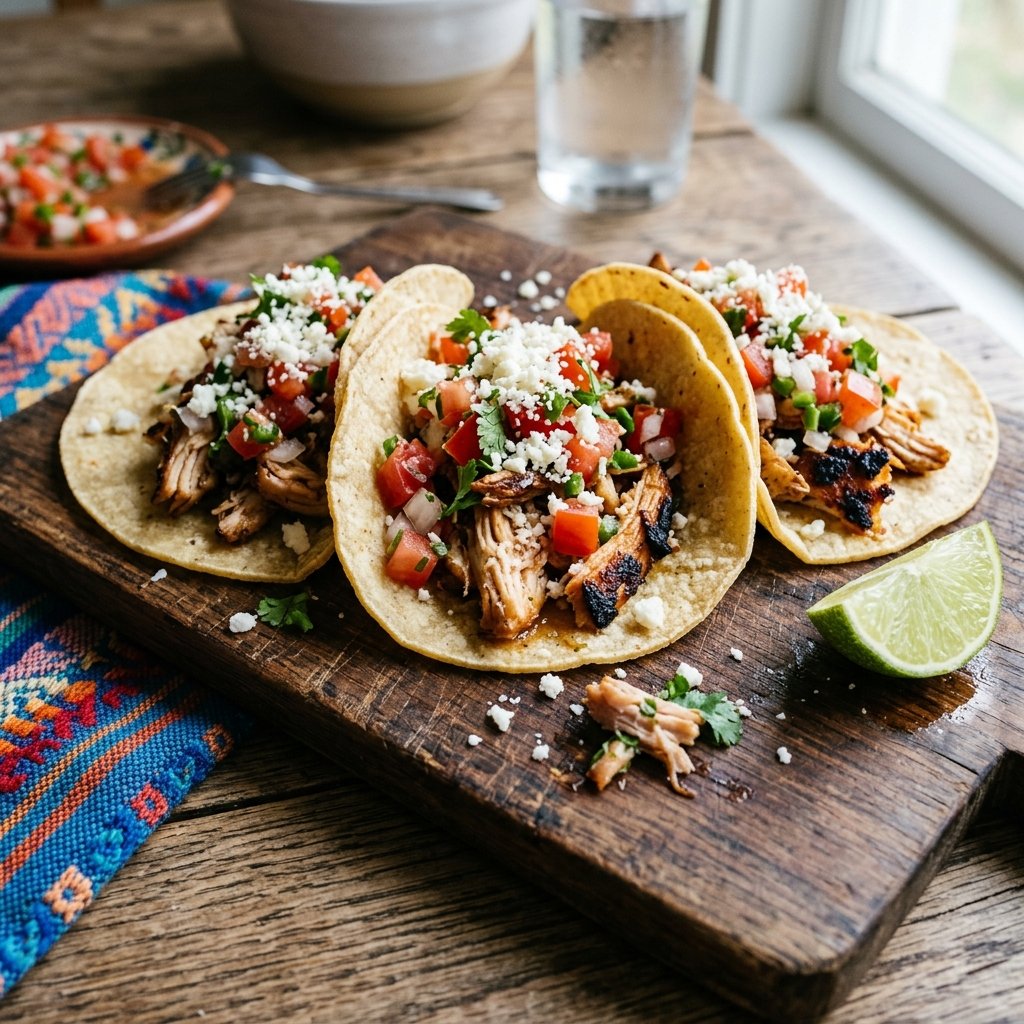
Tacos are the most popular Mexican dish in the world, and they are also one of the easiest to make protein-rich. The chicken is seasoned with a simple blend of chili powder, cumin, and garlic, then cooked until it is juicy and shreddable. The pico de gallo adds freshness and acidity, and the cotija cheese adds a salty finish. The whole thing comes together in about 30 minutes.
This is where the texture changes. The chicken needs to be cooked until it is tender enough to shred but not so long that it dries out. Dark meat is more forgiving than white meat, but both work if you cook them to the right temperature. The key is not to overcook.
Prep: 15 minutes Cook: 20 minutes Total: 35 minutes Serves: 4 Difficulty: Easy
Ingredients
- 1 ½ pounds boneless skinless chicken thighs
- 2 tablespoons olive oil
- 1 tablespoon chili powder
- 1 teaspoon ground cumin
- 1 teaspoon garlic powder
- ½ teaspoon salt
- ½ teaspoon black pepper
- ½ cup chicken broth
- 12 small corn tortillas
- For pico de gallo: 2 tomatoes, diced; ½ onion, diced; ¼ cup cilantro, chopped; 1 jalapeño, minced; juice of 1 lime; salt to taste
- Cotija cheese for garnish
Instructions
Combine the chili powder, cumin, garlic powder, salt, and pepper in a small bowl. Rub the spice mixture all over the chicken. Heat the olive oil in a large skillet over medium-high heat. Add the chicken and cook for 6 to 8 minutes per side until browned and cooked through. The internal temperature should reach 165°F. Remove the chicken to a plate and let rest for 5 minutes.
Add the chicken broth to the skillet, scraping the bottom to release the browned bits. Simmer for 2 to 3 minutes until slightly reduced. Shred the chicken with two forks and return it to the skillet with the broth. Toss to coat. Warm the tortillas in a dry skillet or microwave. Fill each tortilla with the shredded chicken, top with pico de gallo and cotija cheese. Serve with lime wedges.
Tips & Things That Go Wrong
The chicken can dry out if it is overcooked. Use a meat thermometer and pull it at 165°F. The tortillas can crack if they are not warmed properly. Warm them until they are flexible and soft. The pico de gallo can be watery if the tomatoes are not drained. Drain the diced tomatoes before adding the other ingredients.
Substitutions
Use chicken breasts instead of thighs. Use flour tortillas instead of corn. For a dairy-free version, skip the cheese.
Storage & Reheating
The chicken keeps in the refrigerator for 3 days and freezes well for up to 2 months. Reheat in a skillet or microwave. The pico de gallo is best fresh.
Approximate Nutrition Per Serving (2 tacos): 380 calories, 28g protein, 32g carbs, 16g fat, 5g fiber
Cook the chicken until it reaches 165°F and no higher. Overcooked chicken is dry and unappealing. A meat thermometer is your friend.
2. Hearty Beef and Bean Chili With Extra Protein
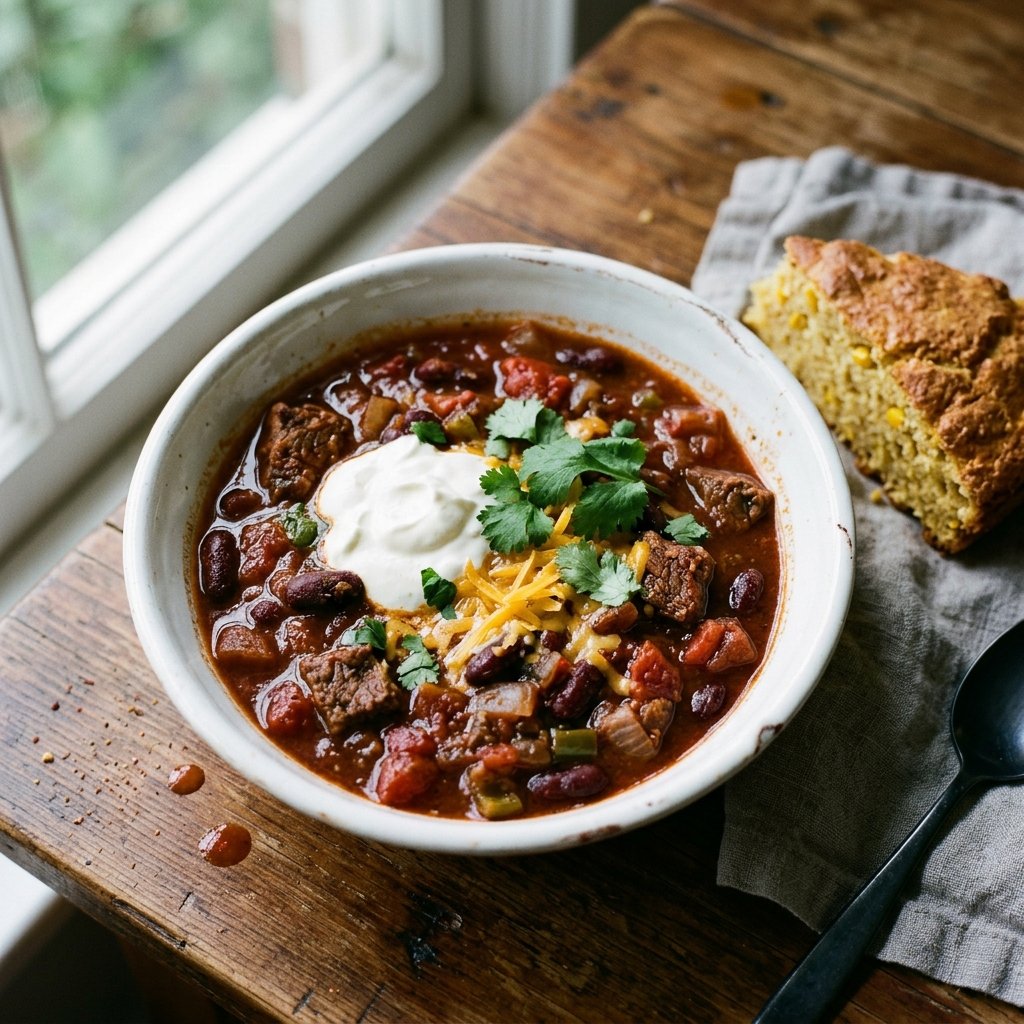
Chili is the ultimate comfort food, and it is also a protein powerhouse. The beef provides high-quality animal protein, and the beans add plant-based protein and fiber. The combination creates a meal that is filling, satisfying, and deeply flavorful. The spices build warmth without overwhelming heat, and the texture is thick and hearty.
Here is the part I would not skip. The beef needs to be browned properly before the liquid is added. If you skip this step, the chili will lack depth and the beef will be bland. Brown the beef in batches if necessary to avoid crowding the pan. A good brown crust is the foundation of a good chili.
Prep: 15 minutes Cook: 1 hour 15 minutes Total: 1 hour 30 minutes Serves: 6 Difficulty: Easy to medium
Ingredients
- 2 pounds ground beef (80/20)
- 1 tablespoon olive oil
- 1 onion, diced
- 1 bell pepper, diced
- 3 cloves garlic, minced
- 2 tablespoons chili powder
- 1 tablespoon cumin
- 1 teaspoon smoked paprika
- 1 teaspoon salt
- 1 can crushed tomatoes
- 1 can black beans, drained and rinsed
- 1 can kidney beans, drained and rinsed
- 1 cup beef broth
- Sour cream, cheese, and cilantro for garnish
Instructions
Heat the olive oil in a large pot over medium-high heat. Add the ground beef and cook, breaking it up with a spoon, until browned and crispy. Remove the beef to a plate. Add the onion and bell pepper to the pot and cook for 5 to 6 minutes until softened. Add the garlic and cook for 1 minute. Add the chili powder, cumin, paprika, and salt and cook for 1 minute until fragrant.
Return the beef to the pot and add the crushed tomatoes, beans, and broth. Bring to a boil, then reduce the heat and simmer for 1 hour, stirring occasionally. The chili should be thick and flavorful. Taste and adjust the seasoning. Serve with sour cream, cheese, and cilantro.
Tips & Things That Go Wrong
The chili can be too thin if you add too much liquid. Simmer it uncovered for the last 30 minutes to thicken it. The spices can burn if they are added too early. Add them after the vegetables have softened. The beans can become mushy if they are overcooked. Add them in the last 30 minutes of cooking.
Substitutions
Use ground turkey or chicken instead of beef. Use pinto beans instead of kidney beans. For a dairy-free version, skip the sour cream and cheese.
Storage & Reheating
This keeps in the refrigerator for 5 days and freezes well for up to 3 months. The flavors improve overnight.
Approximate Nutrition Per Serving: 420 calories, 32g protein, 28g carbs, 20g fat, 10g fiber
Brown the beef well before adding the liquid. A deep brown crust is the foundation of a flavorful chili.
3. Slow Cooker Pork Carnitas With Citrus
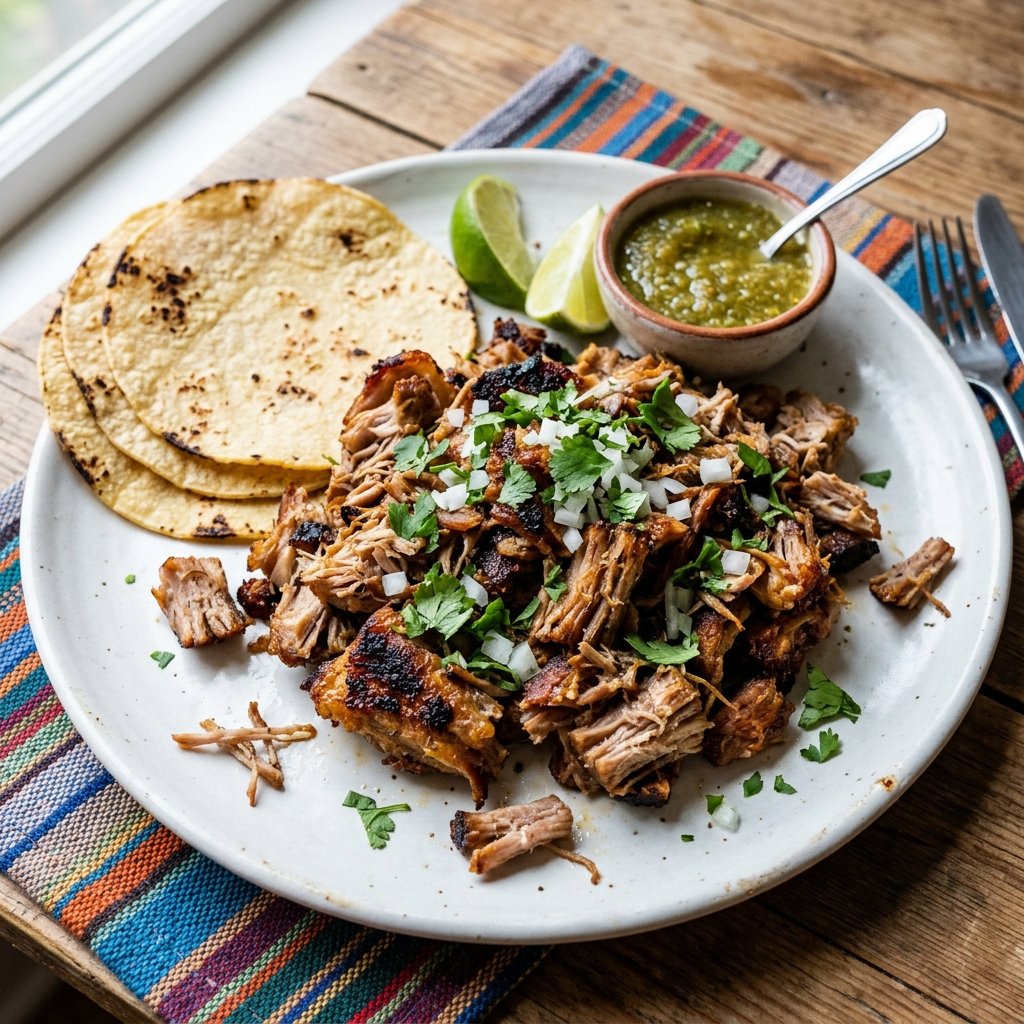
Carnitas are the ultimate Mexican comfort food. The pork is cooked low and slow until it is meltingly tender, then crisped under the broiler for texture. The citrus brightens the richness, and the spices add warmth and depth. It is a dish that rewards patience but is surprisingly simple to make.
The trick is the final crisping step. The pork is tender and shreddable straight from the slow cooker, but the broiler transforms it into something special. The edges become golden and crispy while the interior stays moist and tender. Do not skip this step. It is what makes carnitas taste like restaurant quality.
Prep: 15 minutes Cook: 8 hours (slow cooker) Total: 8 hours 15 minutes Serves: 8 Difficulty: Easy, with time required
Ingredients
- 3 pounds pork shoulder, cut into chunks
- 1 onion, sliced
- 4 cloves garlic, minced
- 2 oranges, juiced
- 1 lime, juiced
- 1 tablespoon chili powder
- 1 tablespoon cumin
- 1 tablespoon dried oregano
- 2 teaspoons salt
- 1 teaspoon black pepper
- Tortillas, salsa verde, and cilantro for serving
Instructions
Place the pork in the slow cooker. Add the onion, garlic, orange juice, lime juice, chili powder, cumin, oregano, salt, and pepper. Stir to coat the pork. Cook on low for 8 hours or high for 5 to 6 hours, until the pork is tender and shreds easily. Remove the pork from the slow cooker and shred with two forks. Spread the shredded pork on a baking sheet and broil for 3 to 5 minutes until the edges are golden and crispy. Serve with tortillas, salsa verde, and cilantro.
Tips & Things That Go Wrong
The pork can be dry if it is overcooked. Cook it until it is tender but not falling apart. The broiler can burn the pork if you step away. Watch it closely and pull it when the edges are just crispy. The citrus can make the meat acidic if you add too much. Taste and adjust before serving.
Substitutions
Use chicken thighs instead of pork. Use any citrus you have on hand. For a dairy-free version, this recipe is already dairy-free.
Storage & Reheating
This keeps in the refrigerator for 5 days and freezes well for up to 3 months. Reheat in a skillet to restore crispness.
Approximate Nutrition Per Serving: 380 calories, 30g protein, 10g carbs, 24g fat, 2g fiber
Broil the shredded pork until the edges are golden and crispy. This step transforms the meat from tender to spectacular.
4. Vegetarian Black Bean and Cheese Quesadillas
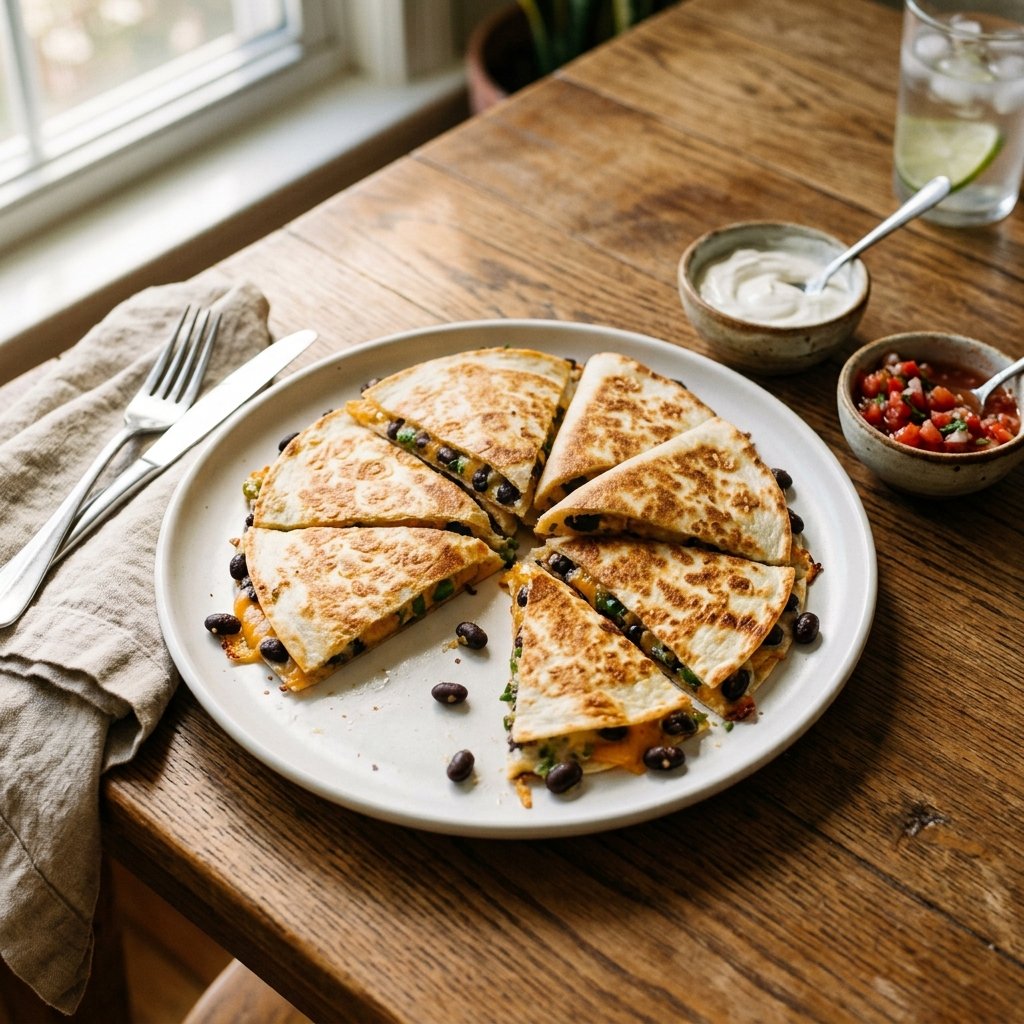
Quesadillas are one of the most popular Mexican dishes, and they are also one of the easiest to make protein-rich. The black beans provide plant-based protein and fiber, and the cheese adds protein and creaminess. The tortilla gets golden and crisp in the skillet, and the whole thing comes together in about 10 minutes.
This is where the texture changes. The quesadilla needs to be cooked until the tortilla is crisp and the cheese is melted. If the heat is too high, the tortilla will burn before the cheese melts. If the heat is too low, the tortilla will be soft and the cheese will not melt properly. Medium heat is the sweet spot.
Prep: 5 minutes Cook: 10 minutes Total: 15 minutes Serves: 4 Difficulty: Very easy
Ingredients
- 8 large flour tortillas
- 1 can black beans, drained and rinsed
- 2 cups shredded cheese (cheddar, Monterey Jack, or a blend)
- ½ onion, thinly sliced (optional)
- 2 tablespoons olive oil or butter
- Sour cream, salsa, and guacamole for serving
Instructions
Heat a large skillet over medium heat. Place one tortilla in the skillet and sprinkle with a layer of cheese, black beans, and onion if using. Top with another tortilla. Cook for 2 to 3 minutes until the bottom tortilla is golden and crisp. Flip carefully and cook for 2 to 3 minutes more until the cheese is melted and the other side is golden. Repeat with the remaining tortillas and filling. Cut into wedges and serve with sour cream, salsa, and guacamole.
Tips & Things That Go Wrong
The tortilla can burn if the heat is too high. Cook over medium heat for even browning. The cheese can leak out of the edges if the quesadilla is overfilled. Use a moderate amount of filling and press down gently while cooking. The beans can fall out when flipping. Use a spatula to support the quesadilla during the flip.
Substitutions
Use any cheese you like. Mozzarella, pepper jack, or a Mexican blend all work well. Use pinto beans instead of black beans. Add cooked chicken, beef, or vegetables for extra protein.
Storage & Reheating
These are best eaten fresh. The tortilla softens after refrigeration. If you have leftovers, reheat in a skillet or toaster oven for the best texture.
Approximate Nutrition Per Quesadilla (2 per serving): 380 calories, 18g protein, 34g carbs, 20g fat, 8g fiber
Cook the quesadillas over medium heat. High heat burns the tortilla before the cheese melts. Medium heat gives you a golden, crisp exterior and melted interior.
5. Grilled Chicken Fajitas With Peppers and Onions
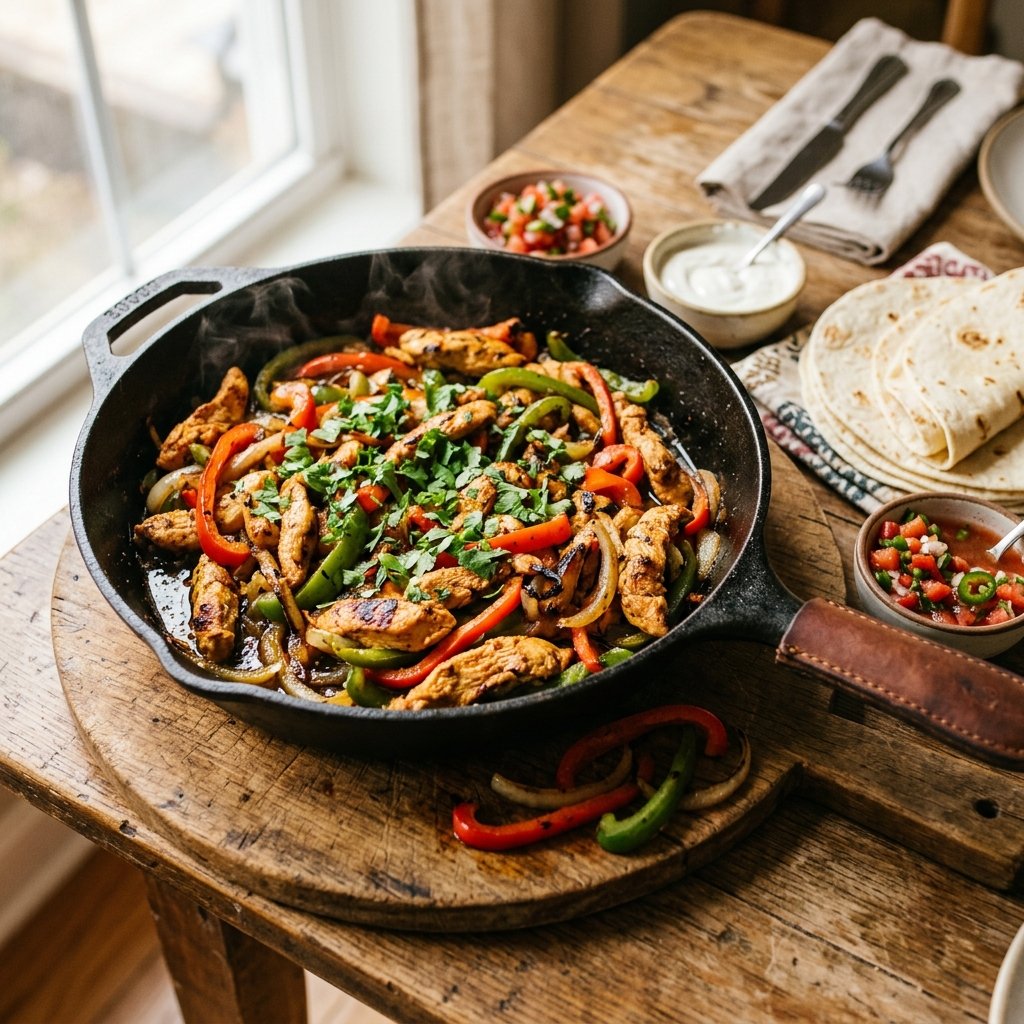
Fajitas are the dish that feels like a celebration. The chicken is grilled or seared until it is juicy and smoky. The peppers and onions are caramelized and sweet. The whole thing is served with warm tortillas and all the fixings. It is protein-rich, colorful, and deeply satisfying.
One thing most recipe cards leave out is that the chicken should be marinated for at least 30 minutes. The marinade tenderizes the meat and infuses it with flavor. If you are in a hurry, 30 minutes is enough. If you have more time, marinate for 2 to 4 hours for the best results.
Prep: 15 minutes + marinating time Cook: 15 minutes Total: 30 minutes + marinating Serves: 4 Difficulty: Easy to medium
Ingredients
- 1 ½ pounds boneless skinless chicken breasts or thighs
- Juice of 2 limes
- 3 tablespoons olive oil
- 2 cloves garlic, minced
- 1 teaspoon chili powder
- 1 teaspoon cumin
- 1 teaspoon salt
- ½ teaspoon black pepper
- 1 red bell pepper, sliced
- 1 green bell pepper, sliced
- 1 onion, sliced
- Tortillas, sour cream, salsa, and guacamole for serving
Instructions
In a bowl, combine the lime juice, 2 tablespoons of olive oil, garlic, chili powder, cumin, salt, and pepper. Add the chicken and marinate for at least 30 minutes. Heat a grill or large skillet over medium-high heat. Cook the chicken for 6 to 8 minutes per side until cooked through. Remove and let rest for 5 minutes before slicing.
While the chicken is resting, heat the remaining olive oil in the skillet. Add the bell peppers and onion and cook for 6 to 8 minutes until tender and caramelized. Slice the chicken and return it to the skillet with the vegetables. Toss to combine. Serve with warm tortillas and toppings.
Tips & Things That Go Wrong
The chicken can be dry if it is overcooked. Use a meat thermometer and pull it at 165°F. The vegetables can be undercooked if they are not sliced thinly. Slice them evenly for consistent cooking. The marinade can be too acidic if you marinate too long. Limit marinating time to 4 hours maximum.
Substitutions
Use steak or shrimp instead of chicken. Use any color bell peppers you like. For a dairy-free version, skip the sour cream and cheese.
Storage & Reheating
This keeps in the refrigerator for 3 days. Reheat in a skillet or microwave. The vegetables will soften upon reheating.
Approximate Nutrition Per Serving (without tortillas and toppings): 320 calories, 32g protein, 12g carbs, 16g fat, 3g fiber
Marinate the chicken for at least 30 minutes. The marinade tenderizes the meat and infuses it with flavor. It is worth the extra time.
6. Protein-Packed Egg and Bean Chilaquiles
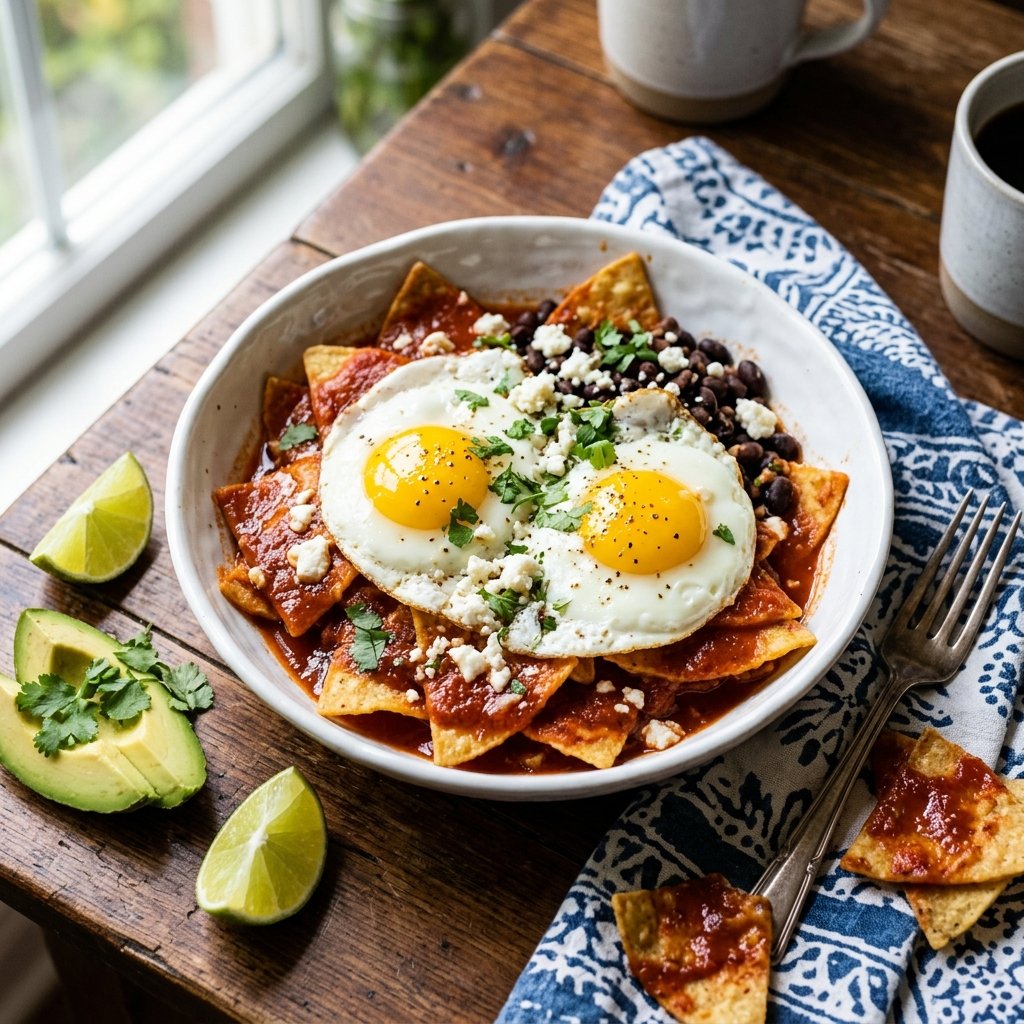
Chilaquiles are the dish that turns leftover tortillas into something spectacular. The chips are simmered in a rich red sauce until they soften but still have texture. The eggs are fried and placed on top, their yolks running into the sauce. The beans add protein and creaminess. It is breakfast, lunch, or dinner, and it is deeply satisfying.
The trick is not to let the chips get too soft. They should be tender but still hold their structure. If you simmer them too long, they become mushy. Add the chips to the sauce, toss to coat, and remove from the heat immediately. The residual heat will finish the cooking.
Prep: 10 minutes Cook: 15 minutes Total: 25 minutes Serves: 4 Difficulty: Easy
Ingredients
- 2 tablespoons olive oil
- 1 onion, diced
- 2 cloves garlic, minced
- 1 can crushed tomatoes
- 1 tablespoon chili powder
- 1 teaspoon cumin
- ½ teaspoon salt
- 8 cups tortilla chips (about 1 bag)
- 4 large eggs
- 1 can black beans, drained and rinsed
- Queso fresco, avocado, and cilantro for garnish
Instructions
Heat the olive oil in a large skillet over medium heat. Add the onion and cook for 4 to 5 minutes until softened. Add the garlic and cook for 1 minute. Add the crushed tomatoes, chili powder, cumin, and salt. Simmer for 5 minutes until the sauce thickens. Add the tortilla chips and toss to coat. Remove from the heat immediately.
While the chips are simmering, fry the eggs in a separate skillet until the whites are set and the yolks are still runny. Top the chilaquiles with the fried eggs, black beans, queso fresco, avocado, and cilantro. Serve immediately.
Tips & Things That Go Wrong
The chips can become mushy if they are cooked too long. Toss them in the sauce and remove from the heat immediately. The eggs can be cooked to your preference. Runny yolks are traditional and add richness. The sauce can be too thin if you add too much liquid. Simmer until it thickens.
Substitutions
Use any beans you like. Use a green salsa instead of red. For a dairy-free version, skip the cheese. For a vegetarian version, this recipe is already vegetarian.
Storage & Reheating
These are best eaten fresh. The chips soften after refrigeration. If you have leftovers, reheat in a skillet, but the texture will not be the same.
Approximate Nutrition Per Serving: 480 calories, 20g protein, 45g carbs, 26g fat, 8g fiber
Add the chips to the sauce and remove from the heat immediately. They will soften in the residual heat without becoming mushy.
Frequently Asked Questions About High-Protein Mexican Food
What are the best protein sources in Mexican cuisine?
Chicken, beef, pork, beans, eggs, and cheese are the most common protein sources. Black beans, pinto beans, and lentils are excellent plant-based options. Traditional dishes like carnitas, pollo asado, and chiles rellenos are naturally high in protein.
Can Mexican food be high-protein and low-carb?
Yes, but you need to be careful with tortillas and rice. Use lettuce wraps instead of tortillas, or use low-carb tortillas. Focus on the protein and vegetables and limit the rice and beans. The fajitas and carnitas are good low-carb options.
How can I add more protein to traditional Mexican dishes?
Add extra beans to quesadillas and tacos. Use Greek yogurt instead of sour cream for extra protein. Double the meat in any recipe. Add eggs to dishes like chilaquiles and migas. Use high-protein cheese like cotija or queso fresco.
Are black beans a good source of protein?
Yes, black beans provide about 15 grams of protein per cup, along with fiber and other nutrients. They are an excellent plant-based protein source and pair well with rice for a complete protein.
What are the best Mexican dishes for meal prep?
The chili and carnitas are excellent for meal prep. The fajitas can be prepped and reheated. The quesadillas are best fresh but can be made ahead and reheated in a skillet. The tacos are best assembled fresh but the chicken can be prepped in advance.
Making High-Protein Mexican Food Work in Your Kitchen
The most important decision you will make is not which recipe to try first. It is how you think about Mexican food. It is not just comfort food. It is not just a treat. It is a cuisine that can be deeply nourishing and protein-rich. The recipes in this article show you how to make it that way.
If I had to recommend a starting point, I would say start with the Chicken Tacos. They are the most familiar and the most forgiving. The technique is simple, the ingredients are accessible, and the result is impressive enough to make you feel like a good cook. From there, branch out to the recipe that fits your particular need. The slow-cooker carnitas for a weekend project, the quick quesadillas for a weeknight, or the chilaquiles for a brunch that impresses.
Mexican food has always been about bold flavors and satisfying meals. With a little attention to protein, it can also be the foundation of a healthy, energizing diet. That is a powerful thing to bring to your table.