
You made a meal. You watched it get poked, separated, and pushed to the edge of the plate. You’re not doing anything wrong — most picky eating has nothing to do with the cooking and everything to do with how the food is presented. The good news is that a few small changes to how meals are built can turn “I’m not eating that” into a plate that actually gets cleared.
These picky eater meals aren’t tricks or hidden-vegetable recipes. They’re straightforward combinations built around foods kids already trust, with room to add something new without a fight.
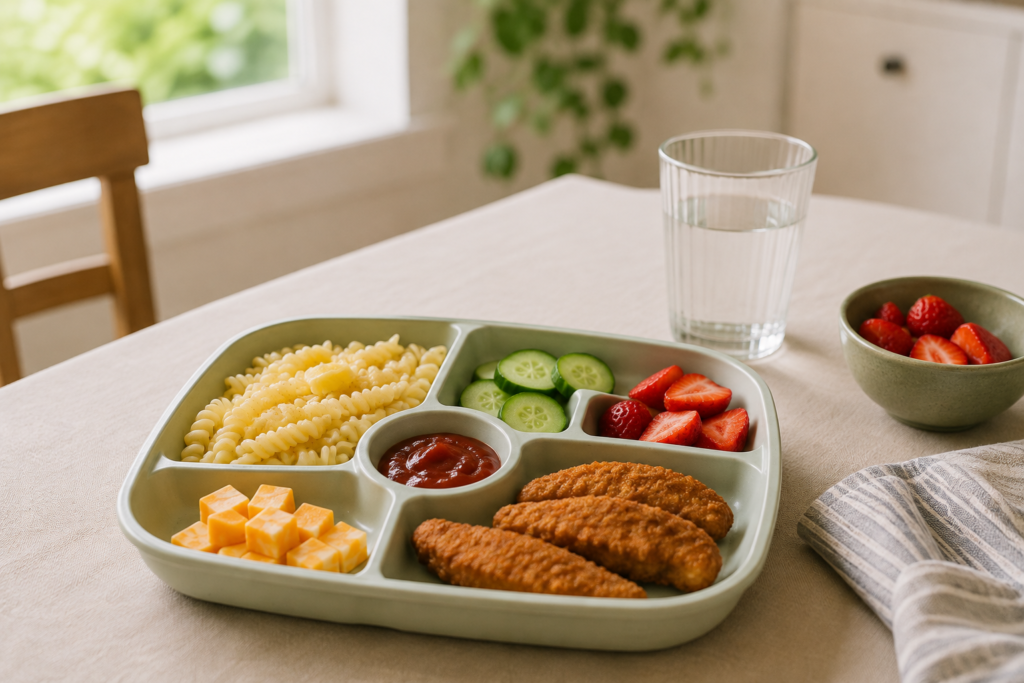
What Makes a Meal “Picky-Eater Friendly”
Before the meal ideas, it helps to know what actually works across most of them:
- Keep foods separate, not mixed. A kid who won’t touch casserole will often eat the same rice, chicken, and cheese served side by side.
- Stick to familiar textures first. Crunchy, plain, and dry tends to go over better than saucy, mushy, or mixed.
- Let kids see the ingredients. Deconstructed meals (a “build-your-own” bowl or plate) give kids a sense of control, which lowers resistance.
- Pair one new food with foods you already know they’ll eat. Never build a whole meal around something unfamiliar.
12 Picky Eater Meals That Actually Get Eaten
Breakfast
1. Build-your-own yogurt bowl Plain or vanilla yogurt in a bowl, with granola, berries, and a drizzle of honey served on the side so your kid controls the mix. Some kids eat it as separate bites rather than combined — that’s fine.
2. Mini pancakes with fruit on the side Small, plain pancakes (freeze extras and toast them straight from the freezer) with a few strawberry or banana slices kept separate, not on top.
3. Scrambled eggs and toast strips Soft scrambled eggs, toast cut into dippable strips, and a small side of fruit. Simple, familiar, and quick on school mornings.
Lunch
4. Cheese quesadilla triangles A flour tortilla with mild cheese, folded and pan-crisped, cut into triangles. Add a small side of mild salsa or ranch for dipping, kept off the quesadilla itself.
5. Turkey and cheese roll-ups Turkey and cheese rolled up whole (no bread required), served with crackers and a few grapes. This one travels well if you’re packing it — it works nicely alongside our kids’ lunchbox ideas for school days when you need something fast.
6. Deconstructed taco bowl Rice, seasoned ground turkey or beef, shredded cheese, and a few tortilla strips, each in its own section of the plate. Kids build their own bite instead of eating a “mixed” taco.
Easy Weeknight Dinners
7. Build-your-own pasta bowl Buttered noodles, a meatball or two on the side, and parmesan in a small dish for sprinkling. Keep sauce separate or skip it — plain noodles with butter are a completely valid picky eater meal.
8. Sheet-pan chicken tenders with sides kept apart Baked chicken tenders, a roasted potato wedge, and a small pile of steamed carrots or broccoli — each in its own space on the plate rather than touching.
9. Mild turkey chili with cornbread A lightly seasoned turkey chili (light on spice, heavy on familiar flavor) served next to a piece of cornbread, with shredded cheese offered on the side rather than stirred in.
10. Baked potato bar A baked potato split open, with small bowls of cheese, steamed broccoli, and diced chicken or bacon bits for topping. Letting kids choose their own toppings does a lot of the work here.
11. Deconstructed stir-fry Rice, cooked chicken, and lightly steamed veggies served in separate piles, with a small dish of soy sauce or teriyaki on the side for dipping rather than tossed together.
The Reliable Fallback
12. Grilled cheese with tomato soup for dipping A classic for a reason. Serve the soup in a small cup for dipping instead of a bowl to eat from — many picky eaters do far better dipping than “eating soup.”
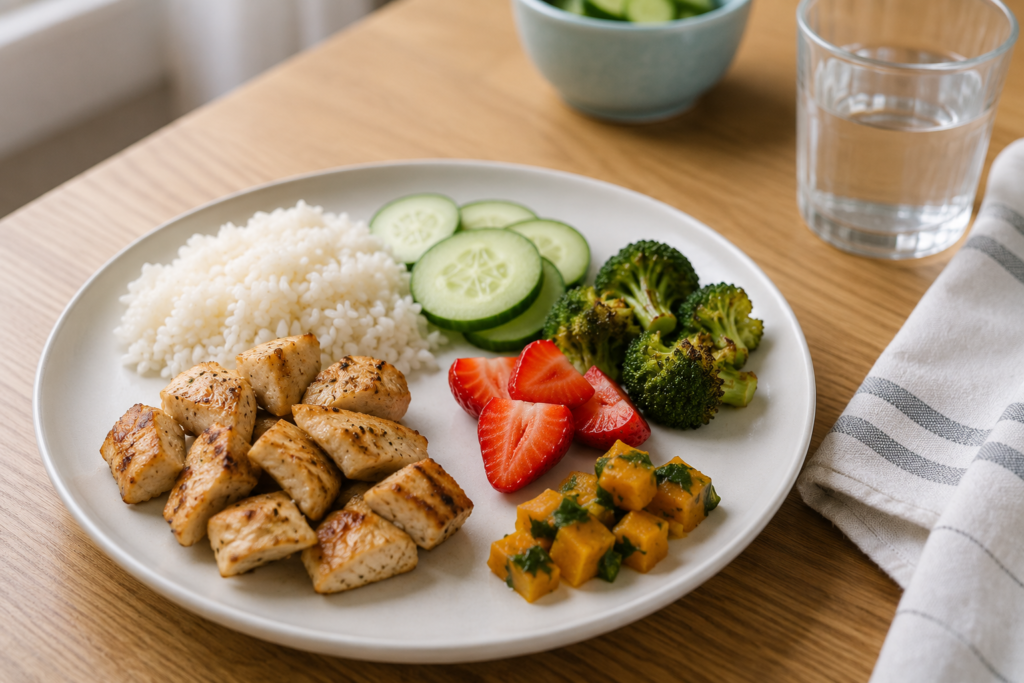
Adding Fruits, Vegetables, Protein, and Whole Grains Without Overcomplicating Things
You don’t need a hidden-veggie recipe to round out a meal. A few practical habits work better long-term:
- Offer one fruit or vegetable at every meal, even if it doesn’t get eaten. Repeated, low-pressure exposure matters more than any single meal.
- Serve raw before cooked, when possible. Many kids accept a cucumber slice or a carrot stick before they’ll touch the cooked version.
- Use protein kids already trust — shredded chicken, cheese, eggs, and beans are easy to fold into almost any meal above without changing the flavor much.
- Swap in whole grains gradually. Try half white pasta, half whole wheat for a few weeks before switching entirely — a sudden change in texture is often what gets rejected, not the grain itself.
Serving New Foods Alongside Familiar Favorites
The easiest way to introduce something new is to put it next to something you already know works, without any expectation that it gets eaten.
- Keep the new food small and separate — a few bites, not a full portion.
- Serve it at the same meal as a guaranteed favorite, so there’s always something they’ll eat regardless.
- Skip the commentary. Kids often push back harder when a new food gets announced or praised too much.
- Repeat it occasionally, even if it’s ignored the first several times. It genuinely can take many exposures before a food gets tried, let alone liked.
This same approach works well for snack time too — the same “familiar plus one new item” idea shows up in a lot of good healthy snack ideas for kids if you want to extend it beyond mealtimes.
Simple Picky-Eater Meal Planning Tips
- Keep 5–6 reliable meals in rotation. Repetition isn’t a problem — most picky eaters do better with a predictable rotation than a constantly changing menu.
- Batch-cook a protein on Sunday (shredded chicken, ground turkey, hard-boiled eggs) and use it across two or three of the meals above during the week.
- Plan one “safe” component into every meal, even the nights you’re trying something new — rice, buttered noodles, or bread are common anchors.
- Pack lunches using the same deconstructed logic — our bento box ideas post has more combinations built the same way, which makes school lunches easier once dinner is sorted.
Frequently Asked Questions
Do I need to make a separate meal for my picky eater? Not usually. Most of the meals above work as a shared family dinner — you’re just plating components separately rather than cooking two different meals.
How many times do I need to offer a food before my kid will try it? It varies a lot by kid, but repeated, low-pressure exposure over several weeks tends to work better than a single big push. There’s no need to force a bite for it to count as exposure.
Is it a problem if my kid eats the same few meals over and over? Not on its own. A rotating handful of trusted meals is a normal part of feeding a picky eater — variety can be added slowly around the edges instead of all at once.
What if my kid won’t eat vegetables at all right now? Keep offering a small portion at meals without pressure, and lean on fruit in the meantime to fill that gap. Some kids go through phases where fruit is the only produce they’ll accept, and that’s a fine place to start.
How do I get more protein into meals my kid already likes? Add it to something familiar rather than serving it on its own — cheese on noodles, shredded chicken in a quesadilla, or a hard-boiled egg alongside toast. Protein is easiest to introduce when it’s blended into a format they already trust.